
Article
The Strategic Pivot from Enterprise to SMB in the Tech World
Why are Enterprise teams at Google and other tech giants being culled in favor of SMB initiatives? Explore the strategic pivot from enterprise to SMB in the tech world.
Winning in DevTools isn’t about static lists—it’s about harnessing real-time signals and contact-level technographics to turn open-source adoption into enterprise growth.
Scaling a developer-first business is harder than it looks. Open-source adoption creates momentum, sure, but it doesn’t leave the kind of breadcrumbs sales teams can follow. The messy truth is that if you’re still relying on a static database to tell you who to sell to, you’re not just behind—you’re operating with a map drawn for a world that no longer exists.
The companies that win in this space don’t treat data as a warehouse; they treat it as a living system. They recognize that success isn’t found in a list of names, but in the signals—the hiring patterns, the GitHub repos, the product trial activity—that reveal a company’s actual intent in real time. That’s why the future of DevTool go-to-market isn’t prebuilt. It’s bespoke.
One of the biggest challenges in DevTools is figuring out who is actually using your technology and who’s ready to buy. The most successful teams don’t guess—they aggregate signals across multiple channels to identify intent and prioritize accounts.
Signals that matter include:
Contact-level technographics add the missing precision: instead of just knowing a company uses Kubernetes or Kafka, you know which engineers touch it, which architects own it, and which executives fund it. That turns a broad “this company might be a fit” into a laser-focused list of the right people to engage.
Developers may be the entry point, but enterprise deals require multi-level engagement. That’s where SDRs (Sales Development Representatives) come in, bridging the gap between marketing and sales while tailoring outreach to distinct personas.
4 key personas to target with unique messaging:
Here, contact-level technographics make SDRs exponentially more effective. Rather than cold-emailing generic “senior engineers,” reps can see who is building in Python, who is deploying Kafka, who manages CI/CD pipelines—and craft outreach that acknowledges their real day-to-day work.
As products mature, a common inflection point arrives: move to the cloud or get left behind. While on-prem may generate healthy adoption, cloud-native offerings open the door to larger customers, subscription models, and recurring revenue.
The transition is painful—engineering, sales, and marketing all need to adapt—but the payoff is exponential growth, with cloud solutions often outpacing legacy offerings in revenue contribution.
Contact-level technographics play a role here too: they reveal which customers are already cloud-heavy, which ones are in transition, and which teams inside an account are experimenting with new architectures. That intel ensures you time your cloud messaging to align with internal momentum.
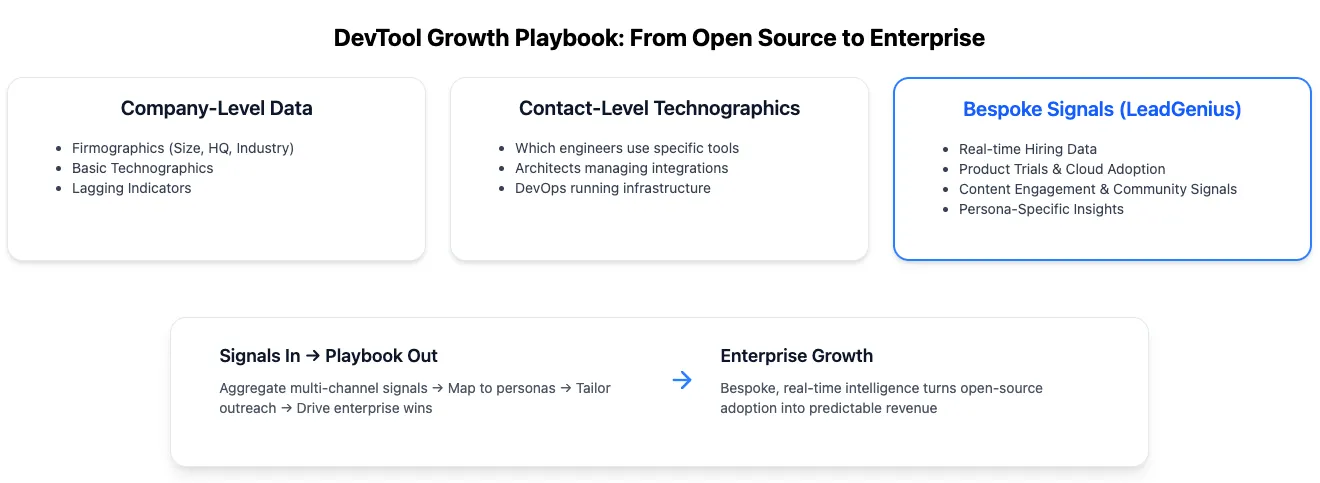
The journey from open-source traction to enterprise dominance comes with repeatable lessons:
The firms that win in DevTools don’t just build software—they build ecosystems. They use data to spot opportunity, they speak to every persona in the buying cycle, and they embrace cloud transformation when the time is right.
The biggest unlock? Contact-level technographics. They give sales and marketing the ability to not only know which companies are a fit, but which people inside those companies matter most—and what tech realities shape their day-to-day.
For developer-first companies, this playbook is more than a set of tactics—it’s a roadmap for turning grassroots adoption into enterprise dominance.
Article
Why are Enterprise teams at Google and other tech giants being culled in favor of SMB initiatives? Explore the strategic pivot from enterprise to SMB in the tech world.
Article
Transitioning from mid-market to enterprise sales involves adopting an approach that includes patience, focus on key industries & leveraging internal resources.
Article
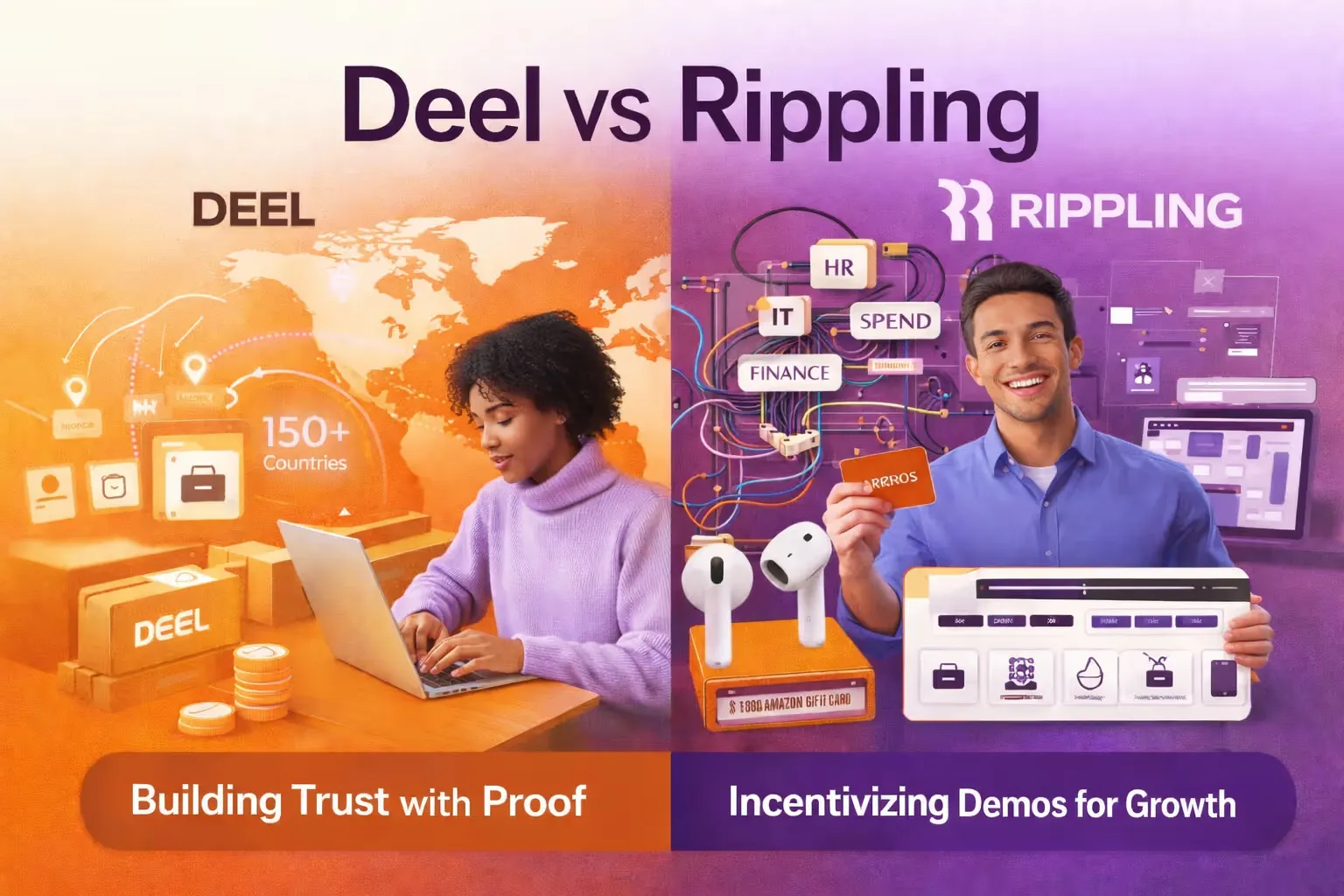
Why two of HR tech’s fiercest rivals reveal more through their ads, channel mix, and creative strategy than any leaked memo ever could.

Get precise, compliant, and on‑demand contact data—tailored to your business needs.